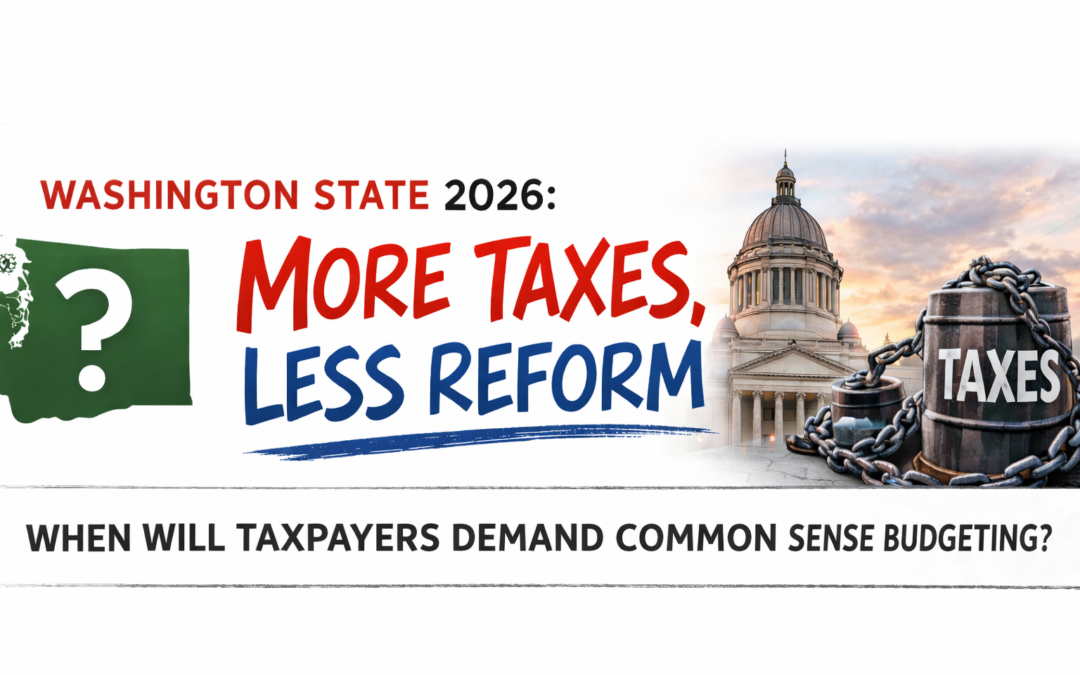
The 2026 session of the Washington State Legislature is shaping up to be a defining moment for taxpayers. Instead of prioritizing tax relief, fiscal restraint, and responsible budgeting, lawmakers are advancing a wave of proposals designed to generate more revenue through expanded taxation.
For families and small businesses already feeling the squeeze of inflation, rising insurance premiums, fuel costs, and housing expenses, the direction is unmistakable. The pattern is clear. More taxes. Fewer cuts.
The Expanding Tax Agenda
This session has centered around proposals that increase revenue rather than reduce spending. From a new income tax structure to expanded business taxes and increased insurance premium taxes, the focus has been on filling budget gaps by reaching deeper into the pockets of Washington residents.
Supporters argue these measures are necessary to fund education, healthcare, environmental programs, and social services. But the deeper question remains:
If state spending continues to grow year after year, will new taxes ever be enough?
Washington already ranks high in combined tax burden when you factor in sales tax, property tax, business and occupation tax, fuel tax, and a growing list of fees and assessments. For rural communities like those in Clallam County, Jefferson County, and northern Grays Harbor County, the impact is especially pronounced. These areas rely heavily on small businesses, retirees, tradespeople, and working families living on fixed or modest incomes.
When taxes rise, the effect ripples outward.
Small businesses face higher operational costs. Insurance premiums increase. Goods and services become more expensive. Hiring slows. Investment pauses. Families tighten their budgets. Economic growth weakens.
The result is not just a higher tax bill. It is economic pressure that touches nearly every household.
The Core Issue: Spending, Not Revenue
At the heart of this debate is a fundamental fiscal principle: Is the problem truly a lack of revenue, or is it unchecked spending growth?
Washington’s budget has expanded dramatically over the past decade. Yet despite record spending levels, many taxpayers continue to question whether government performance has improved proportionally.
Are public safety concerns resolved?
Are homelessness and mental health crises meaningfully reduced?
Are schools delivering measurable improvements tied to increased funding?
Are infrastructure and rural community needs being prioritized?
Taxpayers deserve transparent answers.
Expanding taxes without confronting structural spending growth creates a cycle that is difficult to escape. Each new program adds ongoing costs. Each new obligation requires long-term funding. Eventually, lawmakers return to taxpayers for more revenue.
That is not sustainable governance. That is reactive budgeting.
Representation Must Reflect Taxpayers
Elected representatives have a responsibility to understand the real-world impact of tax policy. It is not enough to analyze spreadsheets and revenue projections in Olympia. Lawmakers must consider:
The small business owner deciding whether to hire.
The retiree on a fixed income.
The single parent balancing groceries and utilities.
The young family trying to buy their first home.
Policy decisions made in committee rooms affect kitchen tables across the state.
True representation requires listening to taxpayers, not just policy advocates or well-funded special interest groups. It requires asking whether government growth is meeting the needs of citizens or simply expanding the reach of bureaucracy.
If programs are not delivering measurable outcomes, reform should come before expansion. Efficiency should come before new revenue. Accountability should come before taxation.
The Urgent Need for Budget Reform
A powerful alternative exists.
Instead of automatically expanding taxes, lawmakers could:
Conduct thorough audits of underperforming programs.
Implement spending caps tied to population growth and inflation.
Prioritize core services such as public safety and infrastructure.
Eliminate redundant administrative layers.
Return excess revenue to taxpayers.
Budget discipline does not mean abandoning services. It means strengthening them by ensuring dollars are used effectively.
The question is not whether Washington needs funding. The question is whether current spending reflects responsible stewardship of taxpayer dollars.
When Will Voters Demand Change?
Every legislative session sends a signal about priorities. When taxes rise but confidence in government performance does not, frustration grows.
At what point will taxpayers demand representatives who prioritize fiscal responsibility over perpetual expansion?
At what point will voters insist that government serve the people rather than grow itself?
Real change begins at the ballot box. It begins with informed citizens asking hard questions, demanding transparency, and holding leaders accountable.
Washington residents deserve a government that protects essential services, respects taxpayer dollars, and resists the temptation to expand budgets simply because it can.
The future of our state depends on leadership that understands a simple truth:
Prosperity is built by empowering citizens and businesses, not by continually increasing their burden.
The 2026 session is not just about tax policy. It is about the direction of Washington’s future.
Will it be growth fueled by innovation and opportunity?
Or growth fueled by taxation?
The answer rests with the people.