
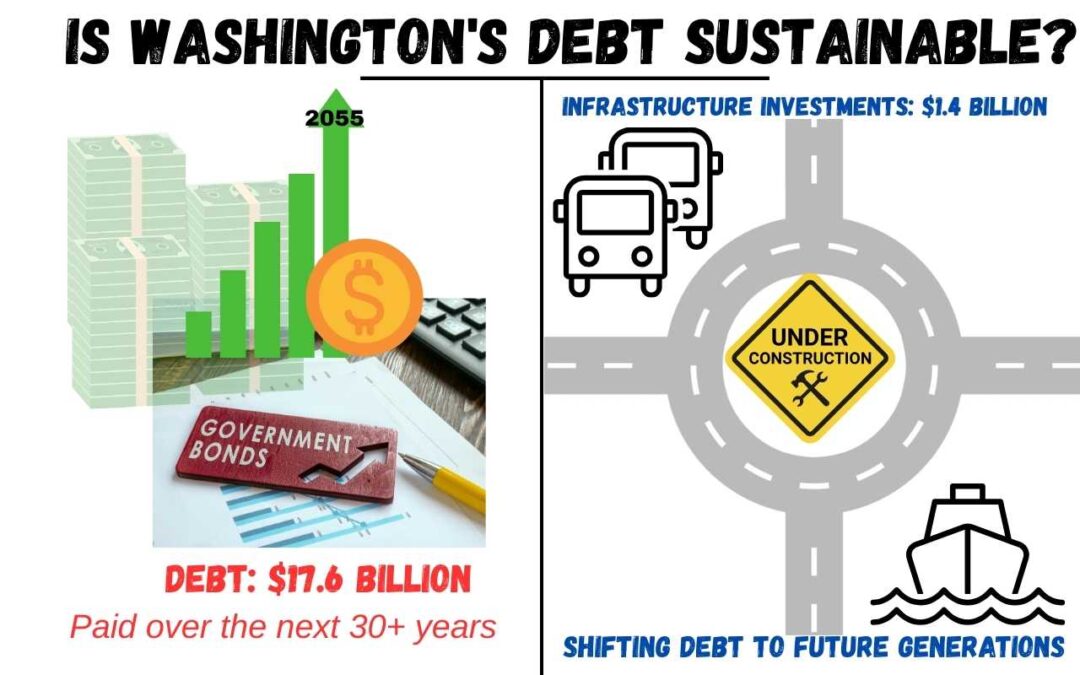
In 2025, Washington State lawmakers passed Senate Bill 5160 (SB 5160), a massive transportation funding measure that will direct over $1.4 billion toward improving the state’s infrastructure. While this legislation presents a forward-looking plan to modernize highways, expand public transportation, and improve ferry systems, one cannot help but question whether this move is truly responsible given the state’s current fiscal situation.
As Washington grapples with a growing budget deficit, SB 5160 raises serious concerns. Should the state really be committing to more debt in a time when the fiscal outlook is uncertain? While the bill claims to avoid new taxes, it does so by placing an ever-increasing burden on future generations of Washington residents. In a time when the state is struggling to make ends meet, this bill could very well be a case of “spending first, thinking later.”
The Move Ahead WA Account: Where Has the Money Gone?
One of the main sources of funding for SB 5160 is the Move Ahead WA Account, which was established as part of Washington’s broader effort to address the state’s transportation needs. But while the Move Ahead WA Account was set up with good intentions, it’s crucial to understand exactly where the money has already gone, not just where it’s supposed to go.
The Move Ahead WA Account was created using revenue from various transportation-related fees and taxes, including funds from the Carbon Pollution Reduction Account and the State Motor Vehicle Fund. These funds have been allocated to projects aimed at modernizing Washington’s crumbling infrastructure and addressing growing transportation needs.
However, rather than focusing on just the intended future projects, we must take a step back and evaluate what has already been done with these funds. Critics argue that while large sums have been earmarked for projects like ferry system improvements and urban transportation expansion, the actual execution of these initiatives has been slow and often poorly planned. In fact, the state’s transportation goals have already been partially delayed due to inefficient management of the funds allocated to the Move Ahead WA Account. For example, despite having funds available, vital projects like replacing aging ferries and improving rural roads remain behind schedule. These delays raise questions about whether the funds are being utilized effectively, or if this is simply another example of government overreach and inefficiency.
The Debt Burden: How Much Does Washington Already Owe?
Let’s not forget about the state’s already substantial debt. With SB 5160, Washington will add to its already burdensome financial obligations. As of 2025, Washington residents are on the hook for a massive $17.6 billion in bond debt related to transportation infrastructure projects. These bonds, issued by the state to fund transportation and other infrastructure projects, have long repayment periods, often extending over several decades.
In fact, much of the funding for SB 5160 comes from issuing new bonds, which will further add to the state’s overall debt burden. As it stands, Washington is already paying off bond debt from previous infrastructure projects that is scheduled to be paid back over 30 years. The new bonds introduced by SB 5160 will be added to this debt load, with repayments stretching well into the future—likely until 2055. That means, for the foreseeable future, Washington residents will be footing the bill for these projects through a combination of taxes and bond repayments.
The Fiscal Impact on Taxpayers: Who’s Paying for This?
While SB 5160 attempts to avoid new taxes, it’s important to remember that the state’s bond payments are essentially a tax on future generations. These new bonds will increase the financial obligations on Washington’s residents for decades to come. And while the bill’s supporters argue that it’s necessary to invest in the state’s infrastructure, the reality is that these projects could have waited—especially when the state is in a fiscal deficit.
Currently, Washington is facing a $4 billion budget shortfall for the 2023-2025 biennium, and projections indicate that the state could face an even larger deficit of $5 billion in the coming 2025-2027 biennium. Despite these dire financial challenges, lawmakers are pushing through SB 5160, committing billions to transportation projects that will saddle future taxpayers with long-term debt.
So, the question must be asked: Why are we committing to more long-term debt when we can’t even balance the budget in the short term?
This bill raises the issue of whether it’s truly responsible to take on more debt when the state’s financial position is shaky at best. Residents are already struggling with higher costs of living, increased taxes, and rising inflation. Does it make sense to pile on additional debt that future generations will be burdened with?
The Pros and Cons of SB 5160
Pros:
- Infrastructure Investment: The bill provides much-needed funding to maintain and upgrade Washington’s transportation infrastructure. This includes highway repairs, ferry improvements, and public transportation enhancements, which will ultimately improve mobility and safety across the state.
- No New Taxes: The legislation avoids directly raising taxes on residents, relying instead on bond funding and existing revenue streams. This approach might seem appealing at first, but it simply shifts the financial burden to future generations.
Cons:
- Increased Debt: By issuing new bonds to fund these projects, SB 5160 adds more debt to Washington’s already significant bond obligations. This debt will take decades to pay off, potentially crowding out funding for other critical state services like education and healthcare.
- Inefficient Use of Funds: While the bill has noble intentions, the execution of past transportation projects has been marred by delays and inefficiencies. Given the current budget deficit, it’s worth questioning whether the state can truly afford to take on even more debt for infrastructure projects that could have waited.
- Long-Term Fiscal Pressure: With the state already struggling with a $4 billion deficit, adding billions more in debt could put Washington in a precarious financial position. How much more can residents be asked to shoulder before they begin feeling the true costs of this kind of spending spree?
Could This Have Waited?
In light of Washington’s current fiscal deficit, one must ask: Could these transportation investments have waited until the state was in a better financial position? It seems reckless to take on additional long-term debt when the state is already struggling to balance its budget. Lawmakers have committed to projects that will take decades to pay off, but we must consider whether these initiatives could have been postponed or restructured to ease the financial burden on residents today.
Currently, with a projected $4 billion deficit in the 2023-2025 biennium and an expected $5 billion in the following biennium, it is worth questioning the timing of such an expensive piece of legislation. Would it have been wiser to hold off on these projects until Washington’s fiscal health improves?
In conclusion, SB 5160 is a significant step forward for Washington’s infrastructure, but it also raises serious questions about fiscal responsibility. While the bill avoids immediate tax increases, it pushes the financial burden onto future generations through the issuance of bonds. In a time of financial uncertainty and a looming budget deficit, the decision to move forward with this legislation could prove to be more of a gamble than a smart investment in the state’s future.
So, the question remains: Is now really the right time to be committing Washington residents to billions of dollars in debt, especially when the state is already struggling to make ends meet? Only time will tell whether this ambitious move will pay off or if it will leave future generations burdened by yet another financial crisis.