On August 26, 2025, Washington’s Lands Commissioner Dave Upthegrove ordered that 77,000 acres of older, structurally complex state forestlands be set aside for conservation. These “legacy forests” are valued for habitat, carbon storage, and wildfire resilience. But as in many rural communities, this decision carries real economic implications for those of us in Legislative District 24.
The Revenue at Stake
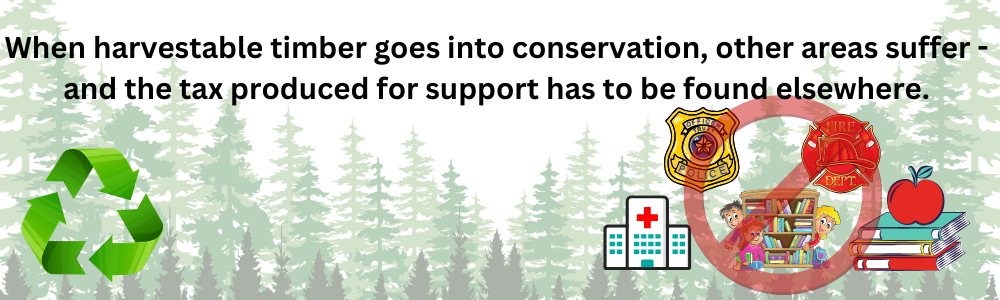
Washington’s state trust lands were established to support critical public services—schools, fire districts, hospitals, libraries, and county budgets. They are working forests, managed to generate revenue while preserving sustainability.
By withdrawing these 77,000 acres from harvest, the state is cutting off a vital stream of income. According to independent industry analysis, the financial impact could be significant:
- More than $1.3 billion in lost timber revenue over 15 years
- Approximately $400 million in lost tax revenue for public services
- Additional millions in lost funding for DNR operations, infrastructure, and local programs
Effects have already been felt in places like Thurston County, where similar decisions have substantially reduced funding for schools, libraries, fire protection, and port operations. While we do not yet know whether parts of Clallam, Jefferson, or northern Grays Harbor are included, nearby areas such as Capitol State Forest, the Willapa Hills, and the Chehalis Basin are reported to be part of the conservation plan—raising concerns for our communities.
How Much Conservation Land Exists in Washington?
To put these figures into perspective, Washington already protects a substantial amount of land:
- The Washington Department of Natural Resources (DNR) manages approximately 3 million acres of land and 2.6 million acres of aquatic areas, some of which are under permanent conservation status.
- The Natural Areas Program oversees 58 Natural Area Preserves and 39 Natural Resources Conservation Areas (NRCAs), protecting over 127,981 acres of diverse ecosystems.
- State-managed natural resource and recreation lands account for approximately 6.5 million acres—about one third of all publicly owned natural lands in Washington.
Even though 77,000 acres may represent a small fraction of total conservation land statewide, these are precisely the lands that generate revenue for rural service providers—so their removal from harvest has outsized local consequences.
Why Forest Thinning Still Matters
Conservation is important, but so is maintaining forest health and reducing wildfire risk. Many of Washington’s forests are overgrown, and without active thinning or management, they become susceptible to catastrophic wildfire. Proactive thinning maintains ecosystem balance, preserves habitat, and supports local economies. Passive preservation, while well-intended, can make forests dangerous and carbon-emitting rather than carbon-storing.
The Bigger Picture
This issue is not about choosing between conservation or economy—it’s about making both possible. If working forests are locked away, the state must be transparent about the cost: either reduced funding for schools and public services or higher taxes on local residents.
In LD 24, where rural economies are already under pressure, cutting revenue without a replacement plan is risky. Families, educators, fire districts, and community members can’t afford funding shortfalls.
A Call for Common-Sense Stewardship
We need conservation policies that are balanced, transparent, and thoughtful. That means:
- Thinning to reduce wildfire risk and maintain forest health
- Keeping revenue-generating forests active to support local services
- Ensuring communities in LD 24 aren’t left with a tax burden they didn’t ask for
Conservation must serve not just our forests, but the people who live in and depend on them too.
#LD24Strong #ForestHealthFirst #SupportLocalSchools #NoNewTaxes #CommonSenseConservation
Sources:
Washington State Standard, Washington Department of Natural Resources “Forest Forward” initiative, American Forest Resource Council, Columbia Insight, InvestigateWest, Washington Natural Areas Program (DNR), Public Land Inventory (state natural resource and recreation lands).